Posts

SQL Injection - enumerating Microsoft AD users using Oracle resources

In my last post I have talked about how to explore SQL injection flaws to perform port scanner when the database is Oracle. Now I am sharing with you a way to perform brute force attack to enumerate users from Microsoft AD (or other LDAP repository). Oracle provides a package called DBMS_LDAP since 9i version and this can help us with such task. It seems that even in Oracle 11g there is no special ACL assigned to such resource. What does it mean? It means we can use it in our SQL injection attacks with most of the Oracle users. Let's take a look at a practical example performed on a penetration testing: http://target/index_target.php?id=15||DBMS_LDAP.simple_bind_s((dbms_ldap.init('targetdomain.com',389)),'admin@targetdomain.com','password')-- In this case, the value of the vulnerable parameter id is concatenated with the result of DBMS_LDAP.simple_bind_s function. We can manipulate the target domain and its port as well user names and passwords. If the LD...
SQL Injection - Oracle as a port scanner

Have you ever used an SQL Injection flaw to perform a port scanner? It's known that common databases such as Oracle and SQLServer have special packages that can perform HTTP connections, build sockets, get host names and other information about networks. How about to use such resources to perform a port scanner exploiting a SQL injection flaw? It's useful to discover other assets in the network and to help us to map the environment. In our case, the DBMS was Oracle 10g. Usually we use the package URL_HTTP package to perform out of band SQL injection attack, however we are going to use it to perform a port scanner. Let's take a look at a practical example performed on a penetration testing: http://target/index_content. php?id=163447||utl_http. request('10.1.0.141:445')-- In this case, the value of the vulnerable parameter id is concatenated with the result of utl_http.request. We can manipulate the IP address as well the ports numbers. When the co...

Man in the middle attack through a web shell

Hello all. Let’s talk today about Man in the middle attack . No, this isn’t a post talking about what it is and how to perform a MITM attack. The proposal of this blog is to share experience with you, then most of the posts (at least until now) are about things that happened in real environments. Recently performing a penetration testing it was possible to get a web shell through a combination of vulnerabilities.   That’s good… a web shell right? But how about to going deep and explore more of the environment? Yes, if you thought about reverse web shell you are right, but, in this case, I couldn’t establish an outbound connection (this is a subject for another post). I did a lot of things in such environment and one of the things done was a MITM attack through a web shell. Let’s go to some important details. First of all, it was a Windows box. There are some tools you can perform a MITM attack on Windows box such as Cain & Abel , but remember, we had a web shell and...

Is Google exposing our old passwords?

Image
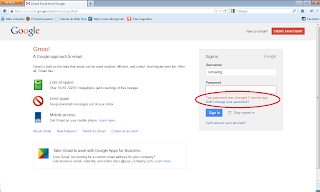
Have you ever noticed Google telling you “your password was changed X days ago” when you type your old password? And how about when you type several old passwords and Google keeps telling you the same message? That’s the security feature to tell the users on Google Accounts interface they changed their password sometimes ago, when they type an old password. Google keeps telling you this even if you: 1)       changed your password 3 months ago 2)       type all your old passwords (at least mine) 3)       access your account everyday several times a day The problem here is a brute force attack could expose passwords used by users before. If we consider there is a practice in which users have the same password for different services on the internet (and most of the time they have a pattern to create passwords, changing only one letter or number), the fact that an attacker can guess a...